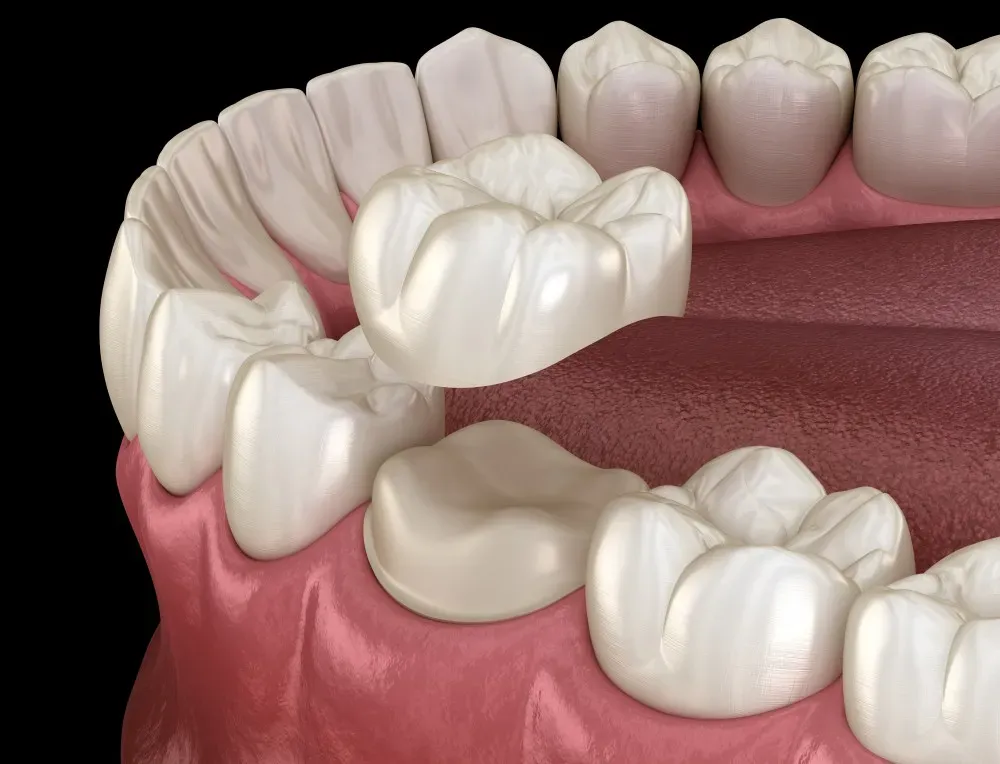
If you have a damaged or missing tooth, you might wonder how to rebuild your smile. At Advanced Family Dentistry in Rancho Cucamonga, California, we help you find the right solution. Dr. Reza Parhizkar and our experienced team specialize in restoring your oral health.
Many patients ask us whether they need a dental crown or a bridge. While both treatments restore your smile, they serve completely different purposes. Your specific dental needs determine which option is right for you.
What is the difference between a crown and a bridge?
A dental crown caps and protects an existing damaged tooth, while a dental bridge replaces a completely missing tooth. These are distinct structural treatments that must be customized to your unique anatomy, according to the American College of Prosthodontists.
A crown fits over your remaining natural tooth structure to prevent fractures. In contrast, a bridge fills a space by anchoring a false tooth to the healthy teeth on either side. At our Rancho Cucamonga, California office, we check your tooth root to see if it can support a crown. We use advanced technology to design custom restorations that blend seamlessly with your natural teeth.
How long do dental crowns last?
Dental crowns are highly durable and typically last over a decade, but they are not permanent, lifelong solutions. In a study of 1,037 single crowns, researchers found an 80.9% survival rate at 10 years. By ages 25 to 30, the survival rate fell to 51.6%.
Daily wear and chewing gradually degrade the cement seal over time, allowing bacteria to seep underneath, which is why regular dental exams are so important. During routine cleanings, we check your crown margins to determine early signs of wear. Our team uses advanced materials to ensure your crown fits precisely and lasts as long as possible.
What are the risks of a dental bridge?
Getting a dental bridge requires permanently altering the healthy teeth next to your missing tooth, which can increase their risk of complications. A study of 229 patients receiving conventional bridges found a 28.7% absolute risk of technical complications over an average of about eight years.
Shaving down healthy teeth to support a bridge can make them vulnerable to decay or structural stress. If you want to preserve your adjacent teeth, we also offer dental implants as an alternative tooth replacement option. Dr. Parhizkar discusses all your options to help you choose the safest, most conservative treatment.
What is the best way to care for your dental restorations?
Caring for your crowns and bridges requires daily brushing and targeted flossing to prevent decay at the margins. The American Dental Association recommends using accepted water flossers as an effective way to remove plaque along the gumline and between teeth.
Water flossing is especially helpful for cleaning under a bridge pontic or around the edges of crowns. We provide personalized oral hygiene instruction at every visit to help you protect your investment.
Ready to restore your smile? Schedule a visit with our Advanced Family Dentistry team today to find the perfect restoration for your needs.